

Views: 0 Author: Site Editor Publish Time: 2026-09-24 Origin: Site


Motor failures carry incredibly high stakes for any industrial operation. Poor insulation in rotor and stator cores directly leads to thermal breakdown. It also causes severe electrical shorts and catastrophic system failures. Modern manufacturing facilities simply cannot afford these operational blind spots. Efficiency demands continue to rise rapidly across all sectors today. We see this especially in modern high-voltage and high-RPM motor applications. Traditional paper lamination alone often falls critically short. You need advanced rotor stator coating solutions to bridge this performance gap effectively.
This guide serves as an objective, technical evaluation framework. We designed it specifically for engineering and procurement teams. We will help you compare different polymer materials accurately. You will assess critical coating dimensions and tolerances effectively. You will also learn to align application methods closely against your actual production realities. By mastering these variables, your engineering teams ensure optimal motor reliability and peak operational performance.
Material Trade-offs: Epoxy coating delivers superior thermal and chemical resistance, while polyester coating offers flexibility and cost-efficiency for lower-stress environments.
Precision Matters: Controlling coating thickness is critical—too thin risks dielectric failure; too thick compromises the air gap and magnetic efficiency.
EV Demands: EV motor core coating requires specialized formulations capable of surviving extreme thermal cycling, high voltage (800V+ architectures), and ATF (Automatic Transmission Fluid) exposure.
Process dictates performance: The choice between electrostatic powder coating and liquid impregnation heavily influences both unit cost and insulation integrity.
Insulation degradation acts as a primary cause of premature motor failure. Industrial generators and traction motors face intense operational stresses daily. Over time, standard insulating papers degrade under continuous heat. They lose their physical structural integrity. When this happens, copper windings make direct contact against the bare metal core. This triggers immediate electrical failures. Applying a dedicated motor core insulation coating prevents this exact scenario permanently.
Engineers must evaluate coating success across three specific performance criteria.
Dielectric Integrity: The coating must prevent phase-to-phase and phase-to-ground shorts perfectly. Slot insulation demands absolutely flawless coverage. Even microscopic gaps invite catastrophic electrical arcs.
Corrosion Protection: Laminations require strong shielding against ambient moisture. They face chemical ingress and harsh industrial fluids daily. Excellent corrosion protection directly extends the motor's functional service life.
Thermal Dissipation: Copper windings generate massive heat loads during operation. Coatings must enhance thermal conductivity significantly. They move heat away from windings directly into the core. This action mitigates dangerous localized hot spots.
Adding these specialized conformal coatings introduces higher upfront manufacturing costs initially. However, doing so drastically reduces long-term warranty claims. It also minimizes expensive maintenance downtime over a standard 10-20 year lifecycle. We see major automotive and industrial manufacturers mandate conformal coatings purely for risk mitigation. They know upfront material investments prevent exponentially more expensive downstream field failures.
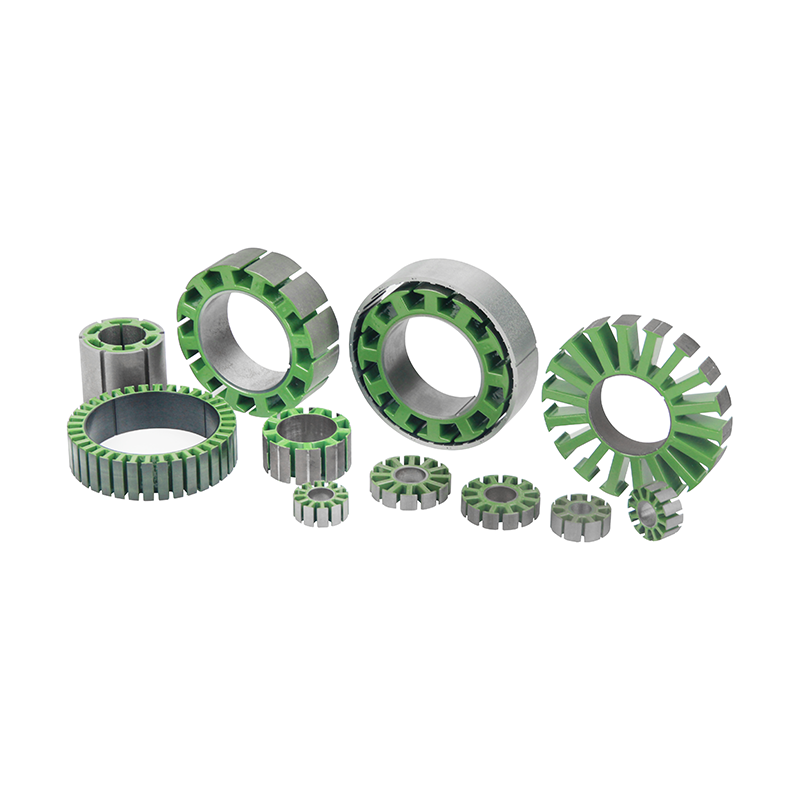
Engineers generally choose between two dominant chemical families. We must compare these two chemistries objectively. Each offers distinct advantages for highly specific operational environments.
Manufacturers rely heavily on epoxy coating for highly demanding applications. It provides a robust, cross-linked molecular structure.
Strengths: It delivers incredibly high dielectric strength. You get exceptional adhesion to raw metallic surfaces. Epoxies easily achieve high thermal classifications like Class H or Class N. They also boast superior chemical and moisture resistance.
Limitations: The cured resin can become somewhat brittle under extreme mechanical flexing. Formulations generally require longer cure times in production. They often demand much higher oven temperatures during manufacturing.
Standard industrial motors frequently utilize polyester coating materials. They offer a more linear polymer structure.
Strengths: You gain excellent mechanical flexibility under stress. Polyester offers very fast curing profiles. It remains highly cost-effective for high-volume, standard-duty motors.
Limitations: It exhibits noticeably lower thermal stability compared to advanced epoxies. Polyester shows higher susceptibility to chemical hydrolysis. You should avoid it entirely in extreme moisture environments.
Use the decision matrix table below to guide your material selection process. It compares operating temperatures against common environmental exposures objectively.
Coating Material Selection Matrix
IEEE Thermal Class | Max Operating Temp | Ideal Material Category | Best Environmental Application |
|---|---|---|---|
Class F | 155°C | Standard Polyester | Standard industrial pumps, low moisture, dry indoor use. |
Class H | 180°C | Standard Epoxy | High vibration equipment, chemical exposure, outdoor motors. |
Class N (and above) | 200°C+ | Advanced Cross-linked Epoxy | Electric vehicle traction motors, extreme thermal cycling. |
Specifying physical dimensions requires a careful engineering balancing act. You cannot simply apply resin arbitrarily across the core. Coating thickness dictates both electrical safety and magnetic efficiency directly.
The physical air gap between a rotor and stator controls motor efficiency fundamentally. This gap must remain incredibly precise. Designers calculate it down to fractions of a millimeter. If your coating runs too thick, it interferes directly. It physically reduces the effective air gap space. This dimensional interference hurts magnetic flux transfer severely. Consequently, the motor consumes significantly more power. It draws extra current to generate equivalent torque outputs.
Engineers must choose carefully between micro and thick coatings based on application.
Thin-film coatings (micro-coatings): These minimize magnetic interference effectively. They keep the precise air gap wide open. However, they require flawless application processes. A single microscopic pinhole creates a direct path for electrical shorts.
Thick coatings: These offer highly robust slot insulation. They provide maximum physical damage resistance. Conversely, they demand incredibly strict dimensional tolerance management during manufacturing.
You must verify thickness consistency routinely during production. Factories use specialized eddy current probes for this task. We also strongly recommend standard dielectric breakdown voltage checks. Hi-Pot (High Potential) testing remains the industry gold standard here. It applies intense high voltage across the cured coating. This test guarantees the film can withstand severe operational electrical stress.
Electric vehicle traction motors introduce unique, high-stress realities. Standard industrial coatings fail rapidly under these aggressive conditions. You must specify dedicated EV motor core coating formulations. They ensure safety compliance and long-term production scalability.
Modern EVs increasingly utilize 800V+ high-voltage architectures. These advanced systems generate severe electrical stress constantly. Standard resins degrade quickly under these heavy loads. Coatings must actively resist Partial Discharge (PD). PD creates microscopic plasma arcs inside the motor windings. Over time, these arcs eat right through standard insulation materials. You need specialized PD-resistant formulations urgently. They help components survive 800V environments safely.
Thermal shock and extreme RPMs also dictate your material choices. EV rotors experience rapid, aggressive acceleration daily. This generates massive centrifugal forces directly on the rotor core. Coatings must maintain structural integrity under these physical forces. They cannot crack, peel, or flake off. Furthermore, they must survive severe temperature fluctuations constantly.
Finally, chemical fluid compatibility remains absolutely mandatory. Modern EV drivetrains use highly specialized internal cooling systems. Stators frequently sit entirely submerged inside these fluids. Coatings must resist ATF (Automatic Transmission Fluid) exposure completely. They must also withstand advanced dielectric cooling fluids. Standard polyesters often dissolve or swell in these harsh chemicals. You must utilize highly cross-linked epoxies for reliable EV applications.
Your chosen application method impacts both final cost and material quality heavily. You must review exactly how your facility applies the coating. Implementation realities carry distinct production risks.
Electrostatic powder coating works beautifully for achieving highly uniform coverage. It handles complex core geometries easily. Operators use specialized spray guns for this process. These guns impart a strong negative electrical charge into the dry powder. The grounded metal stator attracts this charged powder naturally. This process remains highly efficient. You generate minimal material waste overall. However, you must manage the Faraday cage effect carefully. Narrow stator slots sometimes repel charged particles. This leaves the deep internal corners bare. You also need massive floor space for long curing ovens.
Trickle impregnation uses liquid resins instead of dry electrostatic powders. It offers excellent results for deep component penetration. The liquid flows easily into tight windings and narrow core slots. It provides incredible structural rigidity once fully cured. However, it involves managing dangerous volatile organic compounds (VOCs). It also demands much longer processing times per unit.
Risk mitigation requires strict quality control protocols always. You must watch out for common implementation failures.
Uneven Edge Coverage: Sharp lamination edges often repel liquid coatings due to surface tension. This leaves bare metal exposed dangerously.
Air Entrapment: Bubbles trapped inside the resin create permanent weak spots. These microscopic voids fail Hi-Pot testing instantly.
Incomplete Curing: Running ovens too fast leaves the internal resin soft. Uncured coatings offer absolutely zero chemical resistance.
Discuss these specific risks openly. Specify quality control checks clearly alongside your equipment vendors.
Selecting a reliable coating supplier requires actionable evaluation criteria. You are not buying a simple, interchangeable commodity. You are choosing a critical engineering partner for your supply chain.
First, assess their application engineering support thoroughly. Does the vendor offer custom chemical formulations? You might need a highly specific thermal class. Ask if they provide rapid prototyping services. Testing materials on actual stator and rotor lamination stacks is vital. You cannot rely solely on generic technical data sheets.
Next, evaluate their material cycle times realistically. Do the curing requirements align with your facility targets? High-volume automotive lines need extremely fast-curing resins. Slow curing profiles create massive production bottlenecks. Calculate your required units per hour carefully.
Take these concrete next-step actions to formalize your vendor selection:
Request comprehensive Technical Data Sheets (TDS) for all proposed materials. Review glass transition temperatures closely.
Conduct sample dielectric breakdown testing on physical dummy cores.
Audit the vendor's manufacturing quality certifications thoroughly.
Verify active IATF 16949 compliance immediately if you serve the automotive sector.
Choosing an optimal stator and rotor insulation material requires careful, methodical thought. We must reiterate this fundamental reality. It is never a simple commodity purchase. It represents a highly critical engineering decision. You must constantly balance thermal class requirements against strict dimensional tolerances. You also have to match the chemistry perfectly to your specific factory application method.
We highly encourage you to consult directly alongside experienced material engineers. Request comprehensive sample testing early in your mechanical design phase. Match the exact epoxy or polyester formulation to your specific operating environment. Taking these proactive engineering steps guarantees maximum motor efficiency. It eliminates expensive warranty risks entirely. Most importantly, it ensures long-term operational success for your most critical rotating assets.
A: The optimal thickness typically falls in the micro-coating range, around 50 to 150 microns. You must balance dielectric strength against strict air gap tolerances. Thicker coatings provide better insulation but physically interfere with the critical magnetic air gap. This interference reduces overall motor efficiency. Precision electrostatic application ensures you meet both electrical and mechanical requirements.
A: The industry is rapidly shifting from mechanical Nomex or paper insertion toward conformal epoxy coatings. Epoxy offers significantly better thermal transfer away from the copper windings. It also saves immense physical space inside the stator slots. This space-saving allows engineers to pack more copper wire into the motor, directly increasing power density.
A: No, electrostatic powder coating applies only to the bare steel core before winding. You must coat the bare laminations first to create the primary slot insulation. Once the factory inserts the copper windings, you use liquid trickle impregnation or dip resins to lock the entire assembly together.


